
War Memorials-an important public work for J.Gumbrill
Written by: Annissa Cole
Published: 4th November 2026

The renovation we carry out on War Memorials is an important public work for J.Gumbrill. These memorials commemorate war, victory, or peace, and remember people- and animals- who served in, were affected by, or died as a result of war, conflict, or peacekeeping. In the UK, the Imperial War Museum keeps a War Memorials Register which records many forms of memorials sited in the UK, Channel Islands, and Isle of Man.
The true number of War Memorials in the UK is hard to quantify. While many are public, and a well-known feature of their local area, this is not true of every one. Some are smaller, or in private spaces. We may think of them as being the stone structures we see in town and village centres. However, wall-mounted plaques, land, and even buildings can meet the Imperial War Museum’s definition. It’s therefore likely that there are over 100,000 of them in the UK, with over 80,000 having been catalogued by the War Memorials Online project. Many of these were designed to commemorate the end of World War 1 and the losses which many communities felt.
J.Gumbrill has always felt the restoration and maintenance of such local landmarks was a key responsibility for the firm. When you have been part of a community for such a length of time, you feel connected to it. Contributing to the ongoing presence of the structures in stone we see around us every day is important to us.
The work on such significant monuments is therefore a process which takes thought and time. They are too important to rush through the stages. Here is an outline of the steps each renovation will take:
Instruction and appraisal- the organisation responsible for the memorial (usually a local council) will contact us and ask what work needs doing and may also advise us of work they would like done. For example, they may have discovered new names which should be added. Our Memorial Mason, Richard, will visit the site and assess the duration of the work and any other practicalities. The job may require a scaffold or raised platform, and a clear understanding of how long it should take is crucial. If there is letter cutting or other inscription work, then one of our letter cutters may also need to visit the site. On some occasions, local meetings have taken place with the opportunity for residents to understand more and ask questions about what action will be taken and why.
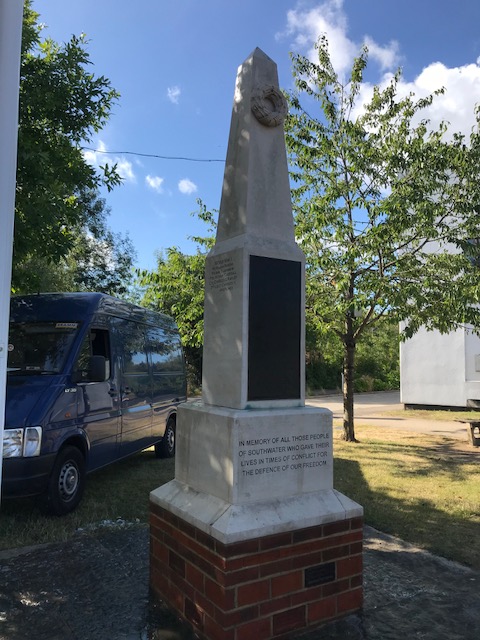
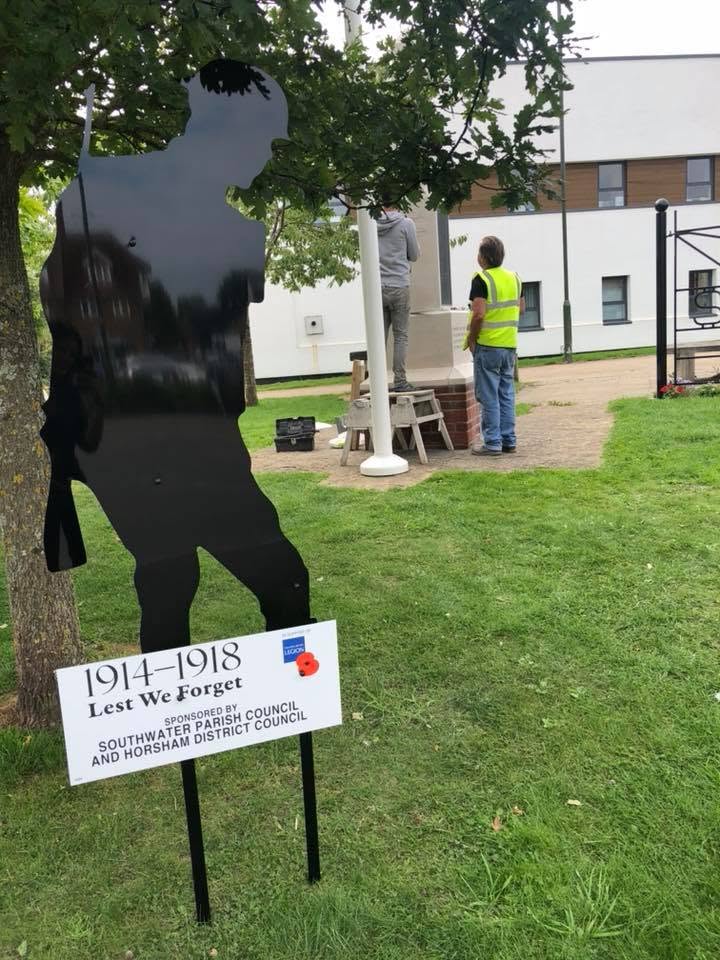
Scheduling- a large job, such as a restoration of a public work, can take significant time. This can be increased if the work is iterative, for example if cleaning and drying needs to be completed before repainting and new inscribing can take place. It’s important that this can be given sufficient time. However, it also must be accommodated into the work which J.Gumbrill is carrying out for other customers. Therefore, restoring a War Memorial (particularly if the aim is completion by a specific date) is planned a long time in advance and scheduled with plenty of notice.
The work itself then takes place as planned. It’s a balance between minimising disruption with efficiency and taking the required time and space. Understandably, work to a prominent local structure often attracts attention and interest from passersby. Explaining what is being done and offering reassurance is a crucial part of the work and the need to have conversations is factored into overall timescales.
Understandably, there is often a wish to have a War Memorial restored so it can be looking its best as a focal point for commemorative activities in November- or other anniversaries. VE and VJ Day anniversaries are both times when the end of significant conflict is marked. J.Gumbrill carried out several restorations during 2014 to 2018 to coincide with 100-year anniversaries of significant dates in World War 1. Southwater War Memorial was refurbished in 2018, to mark the centenary of the conclusion of World War 1. The Memorial was cleaned, and new names added.
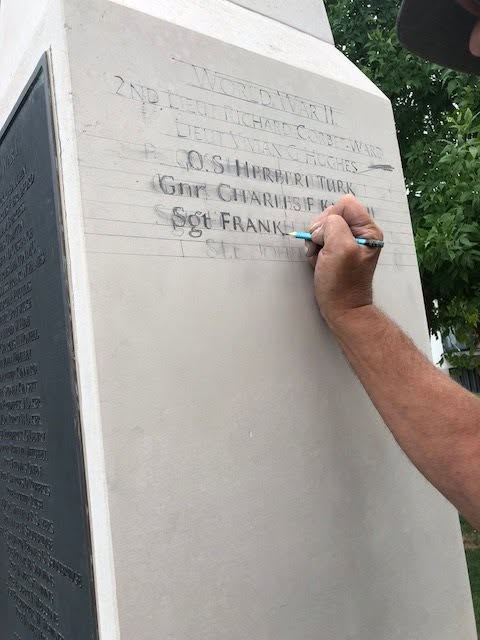
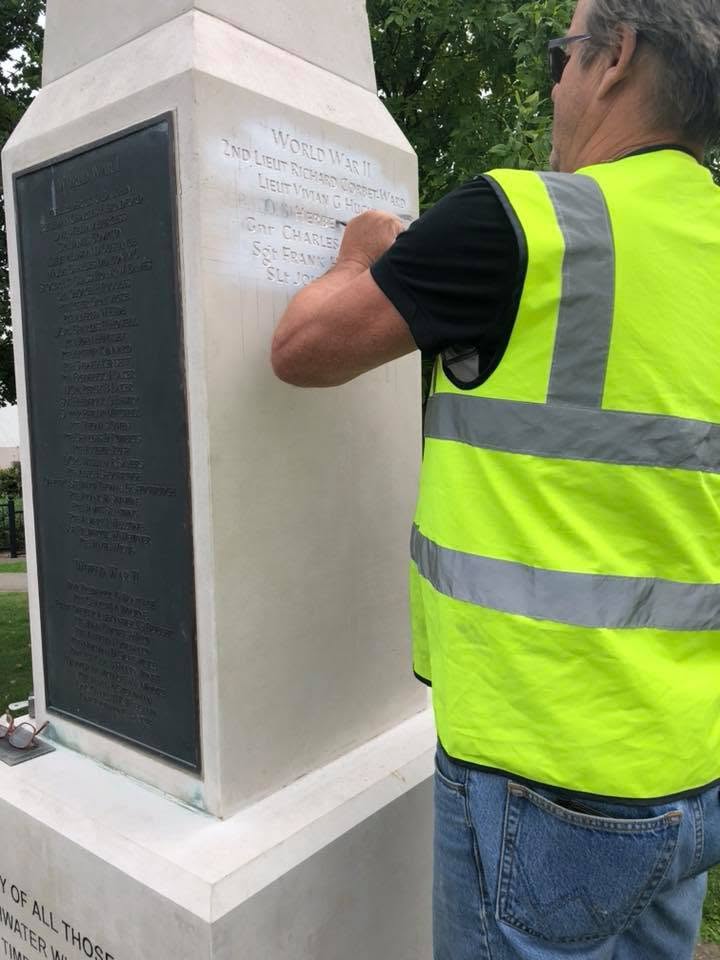
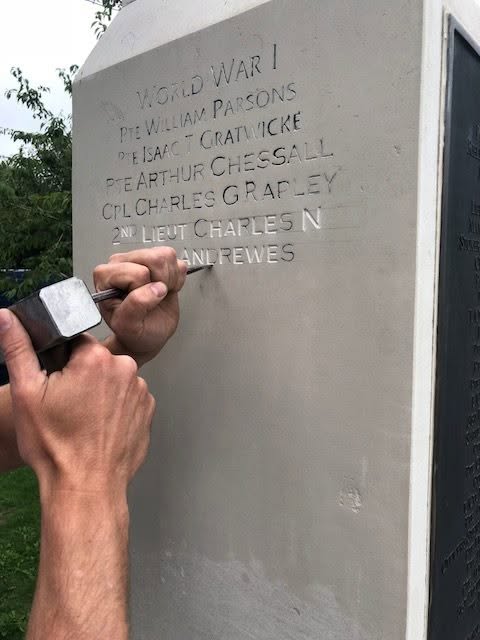
All monumental masonry work is important. It requires care, attention to detail, and meticulous craftsmanship. However, projects like these are especially significant. The restoration of a historic landmark contributes to its life story- which includes all the people it commemorates. J.Gumbrill is proud to be trusted to carry out this kind of work, and proud to live in communities which recognise our skills to be able to do so.
If you would like a quote for any aspect of memorial work, from a renovation project big or small to a brand new monument, please get in touch. We will be pleased to assist at every step of the process.
Thanks for your time. Annissa.