
How do different types of headstone materials weather?
Written by: Annissa Cole
Published: 3rd June 2026

How different types of headstone materials weather over time is an important consideration when choosing a memorial. Here, we look at the materials used most frequently and compare their features. We also discuss any characteristics which have an impact on their endurance.
Many different factors can impact on the changing appearance of a memorial over time. While we call these ‘weathering’, it is not only the impact of weather, although this can influence a memorial. Persistent rain may cause damage to a softer stone. Also, prevailing winds may lead to regular impacts of debris or nearby plants being blown repetitively against the memorial’s face. Plants themselves can also cause damage: tree sap can alter the surface of a stone, as can berries if they stain it. Other factors which can lead to stones ‘weathering’ include air pollution and time. Stones can also be damaged by freeze/thaw where small cracks open over time.
Marble
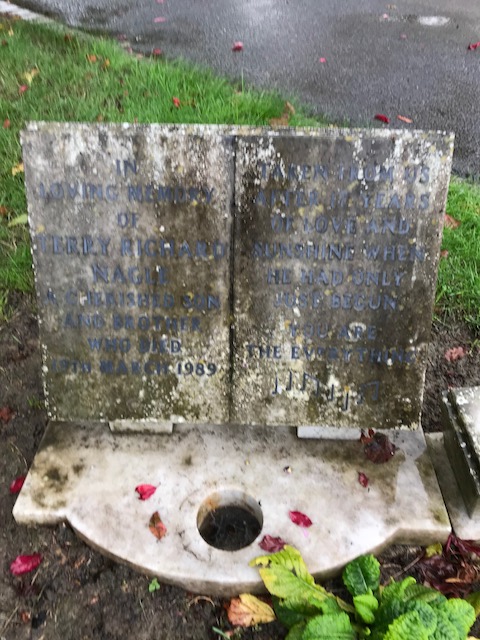
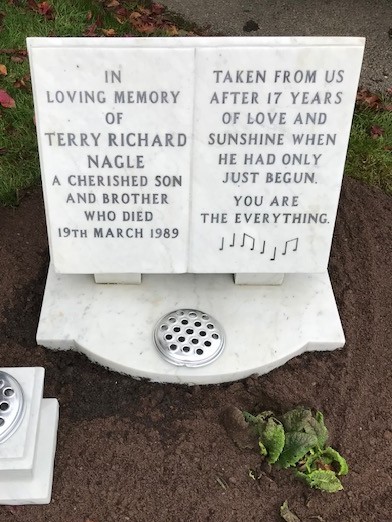
Marble is the material which was most often associated with headstones. However, it is an extremely porous stone which absorbs water easily. Although water doesn’t necessarily erode the surface, it discolours it quickly and this makes it look weathered. Marble changes colour due to the growth of algae. This means it alters from an initial white to green or brown. It also retains paint poorly too, meaning painted inscriptions are not suitable.
While many churchyards do not allow marble memorials (due to preferences for muted tones), they are often permitted in cemeteries. J.Gumbrill suggests that a marble headstone is only commissioned with the knowledge that its appearance will deteriorate quickly. Regular, professional work is required to maintain its original colour and re-carve the inscription.
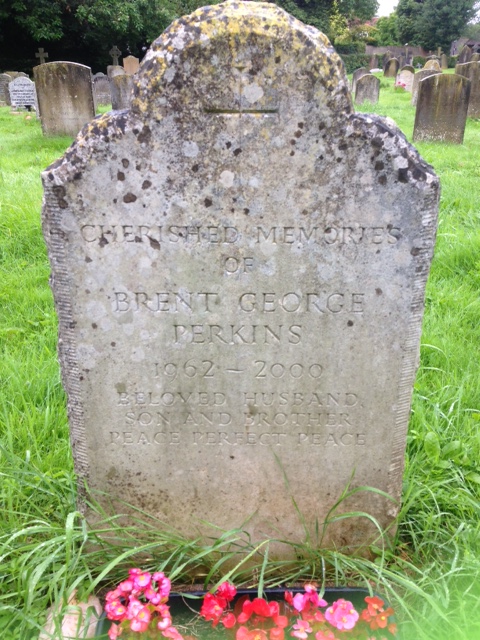
Over time, marble will weather and this can lead to lack of legibility of inscriptions. At the extreme, carved details can change shape as they lose definition.
Limestone
There are several different types of limestone but the three most used for memorials are Portland stone, York stone and light nabresina. Although these are not identical in appearance, they are similar in terms of weathering.
These types of materials can weather over time. You may remember seeing War Memorials, which are often made of Portland stone, whose lettering is not legible. Limestone is porous and subject to water damage– especially York and Portland. It can also attract algae and moss, as with marble. However, this may not be as apparent as a marble monument as there may be less of a colour contrast. These limestones are not as pale as marble, they tend towards cream, honey and beige tones.
Many people like to choose a Limestone memorial because of its associations with public monuments or historic villages. However, we advise that you should only choose one if you are aware of the possibility of deterioration over time. We recommend regular cleaning with professional materials to keep a Limestone memorial well-maintained. Light Nabresina is harder, so is more durable and less susceptible to weathering, but any type of limestone can deteriorate.
Slate
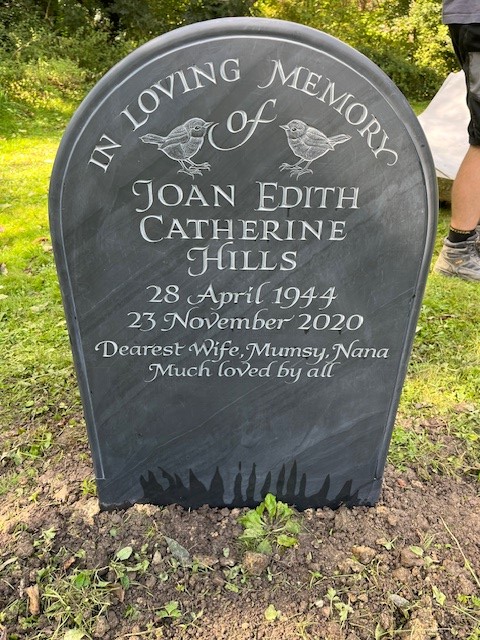
Slate is often thought of as a good choice for a memorial because of its durable nature. It is less porous than some other materials used for monuments. Its lack of susceptibility to mould or algae means it doesn’t discolour. It is also weather resistant, meaning it’s likely to retain integrity over time.
However, as with all memorials, choosing slate does lead to making compromises. While it doesn’t weather, it does require specific cleaning techniques. It is particularly susceptible to abrasion and even a brush can cause damage. Specialist materials and soft cloths are necessary. Also, slate is always a darker colour, which are a particular aesthetic choice. It isn’t suitable for someone who likes dark, prominent lettering.
Granite
Granite is generally acknowledged to be one of the hardest materials we use for memorials. It is low in porosity and its smooth surfaces do not attract algae or moss. As well as memorials, granite is used extensively in building including paving and roofs, and this is because it is thought to endure well.
Granite is a good solution if the longevity of the memorial is a prime concern. However, it will still require maintenance. For example, granite requires painted or gilded lettering to ensure the inscription is prominent. This will not last as well as the memorial itself and so will require replacing over time.
It’s also worth noting that not all types of granite are permitted in churchyards. This is for two different reasons. Firstly, it is the colours. Churchyards prefer neutral tones which give a homogenous impression. This means some of the blue or red granites (amongst others) will be prohibited. Also, granite is available in a polished finish, which is arguably best from a maintenance perspective as it facilitates easy cleaning and it’s less likely that debris adheres to it. However, this is also not permitted and so a honed finish will be necessary.
Granite has a specific appearance and is not to everyone’s taste: some feel it looks less ‘natural’ than other types of stone, although it is quarried just as they are.
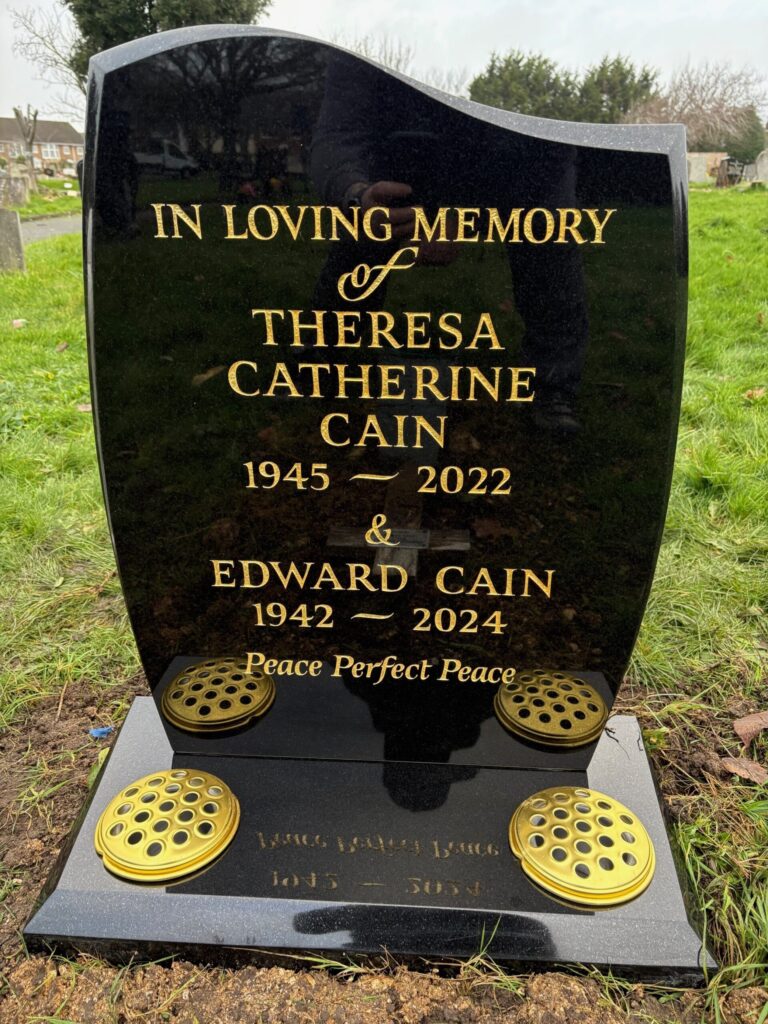
If the ongoing endurance of a material is of significant importance, it will be a major factor impacting choice. Others may have other preferences and accept the possible cons of a particular type of stone. However you feel, it is most important that you understand how your choices impact the ongoing life of the memorial. You can trust J.Gumbrill’s professional, experienced team to advise you every step of the way.
For more information about different memorial materials, why not visit our ‘Stone types’ page which contains lots of useful detail. If you would like to commission a memorial, or plan a renovation for an existing one (whether that be due to weathering or other factors), why not get in touch and we’ll be happy to help.
Thanks for your time, Annissa.