Stones explained series: Slate
Written by: Wilf Freeman
Published: 21st October 2026
In the next of our ‘Stones explained’ series: Slate. This post contains all the information you might need to decide whether this is the material for you. As with our previous post about Granite memorials, Wilf Freeman takes you through all the pros and cons of choosing monumental masonry made from this attractive- but rare- material.
What is slate?
Slate is a metamorphic rock formed from layers of shale or mudstone that have undergone pressure over millions of years. It is usually black-grey or green in colour with a mostly uniform surface appearance, and a paler inner which is revealed through carving. It is quarried in the UK, in Wales and in Cumbria. Welsh slate tends to be black or dark grey in colour while Cumbrian slate is green.
What are the characteristics of slate?
Slate is a harder stone, which makes it durable with low porosity. This means it is ideal for memorials as it can stand the test of time. Some of the impacts of weathering that you will see on other stone types, such as erosion or the growth of algae, do not occur on slate. It also resists frost well. It does not have flecks or veins of colour you may see on other stone types, especially on the surface.
Although slate is a very hard material, it is very easy to scratch or damage its surface through abrasion. This means that it needs to be cleaned very gently. It is better to clean it often, without any high-pressure techniques, than infrequently.
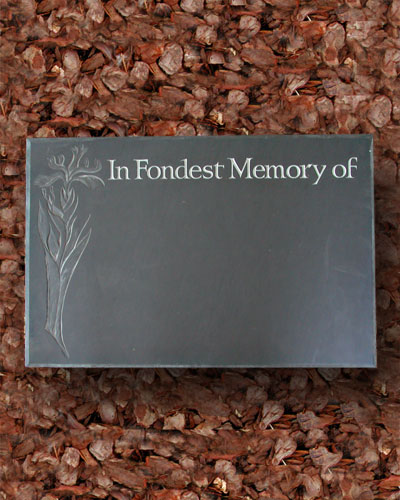
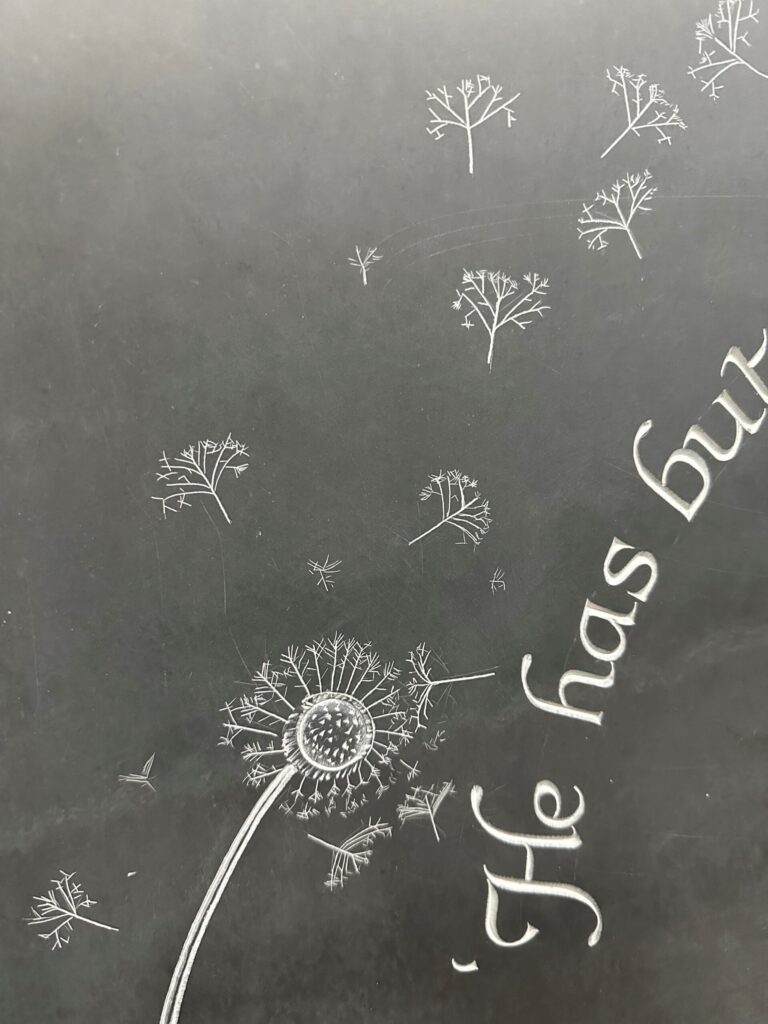
The ‘inner’ colour of slate is normally paler than its outer surface. This difference in colours can be exploited through sensitive lettering and decorative choices. Although it can be carved by hand or sandblasted, it really is a material that can be used to make the best of a skilled letter cutter’s handcarving ability. Slate memorials can be true works of art.

How does using slate for a memorial impact on our choices?
In many ways, slate is a versatile stone. It can be sandblasted or handcarved. It is especially suitable for complex designs which reveal the contrast between the inner and outer colour, yet its smooth finish is also a complement to a simple, minimal inscription.
We recommend that a grey ‘wash’ is painted into carvings and letterings. This is because it’s possible that they can ‘disappear’ in wet weather- depending on the contrast between the outer and the inner. The grey wash means they are always visible. It may be that this necessity for additional work is not apparent until the carving commences and so this may be an additional cost above what has been quoted for. We would discuss this with you before commencing.
Another point that’s important to note is that the quantity of slate available is lower than that of many other types of material used for memorials. Quarries may also struggle to produce large amounts of high-quality stone in sizes which are able to be cut down to headstone dimensions. Therefore, slate memorials are only available in a few simple shapes and sometimes smaller sizes; they are often also provided at a smaller depth than equivalents in other stones.
The relative scarcity of slate as a raw material also means that there is an impact on the cost. It is likely that a memorial made of slate will be more expensive than one of equivalent size and shape in many other types of stone. We are always happy to provide you with a full, written quotation for any memorial- and can give you an equivalent price for more than one type of stone to enable you to effect a comparison.
Can we have a slate memorial in any setting?
Yes- and this is another reason why we consider slate to be so versatile. Cemetery rules are usually more relaxed and will permit a slate memorial under usual circumstances. However, churchyard regulations tend to be stricter, and one of the attributes they tend to not permit is darker colours. However, because slate is a natural stone, these rules often don’t apply. This makes slate a good choice for anyone who wishes to commission a churchyard memorial and prefers something darker- although you may still not be allowed contrast or metallic lettering. As with all memorial orders, we will work with you to ensure that your chosen preferences are acceptable within the rules of the prevailing burial authority.
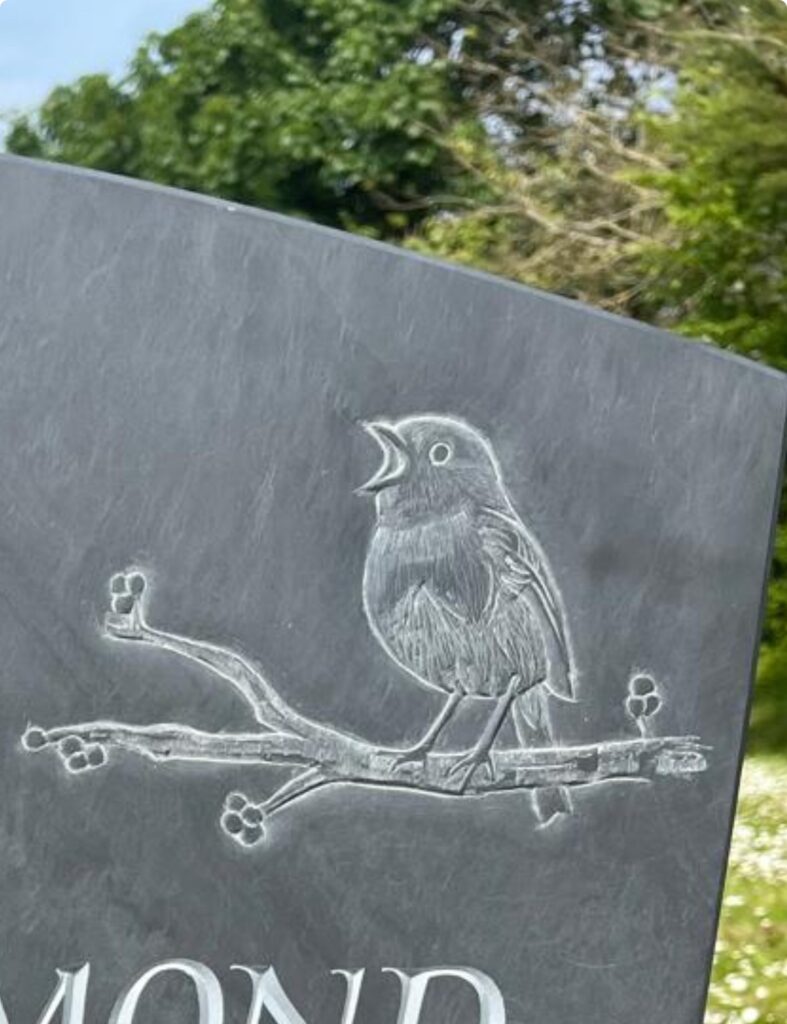
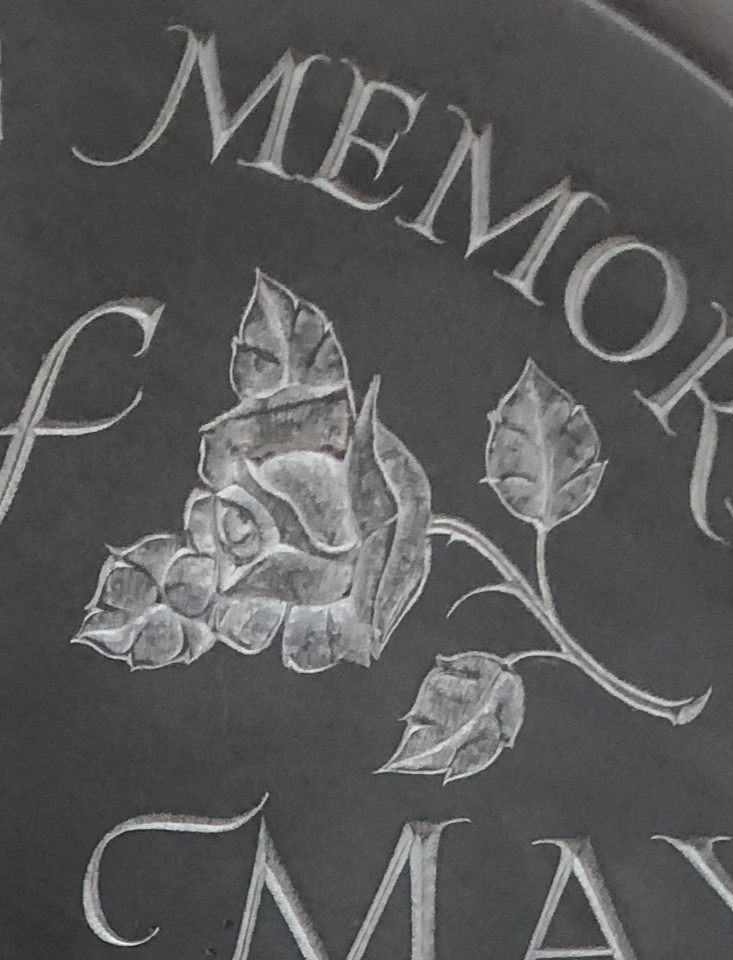
To compare the different types of stone that a memorial can be made in, why not visit our helpful ‘Stone types’ page which contains all sorts of useful information. If you wish to commission a memorial, or need further guidance to help you with your choices, please get in touch. We are always happy to offer our advice.
Thanks for your time, Wilf.